
Trade Review Checklist: 15 Questions to Ask After Every Trade
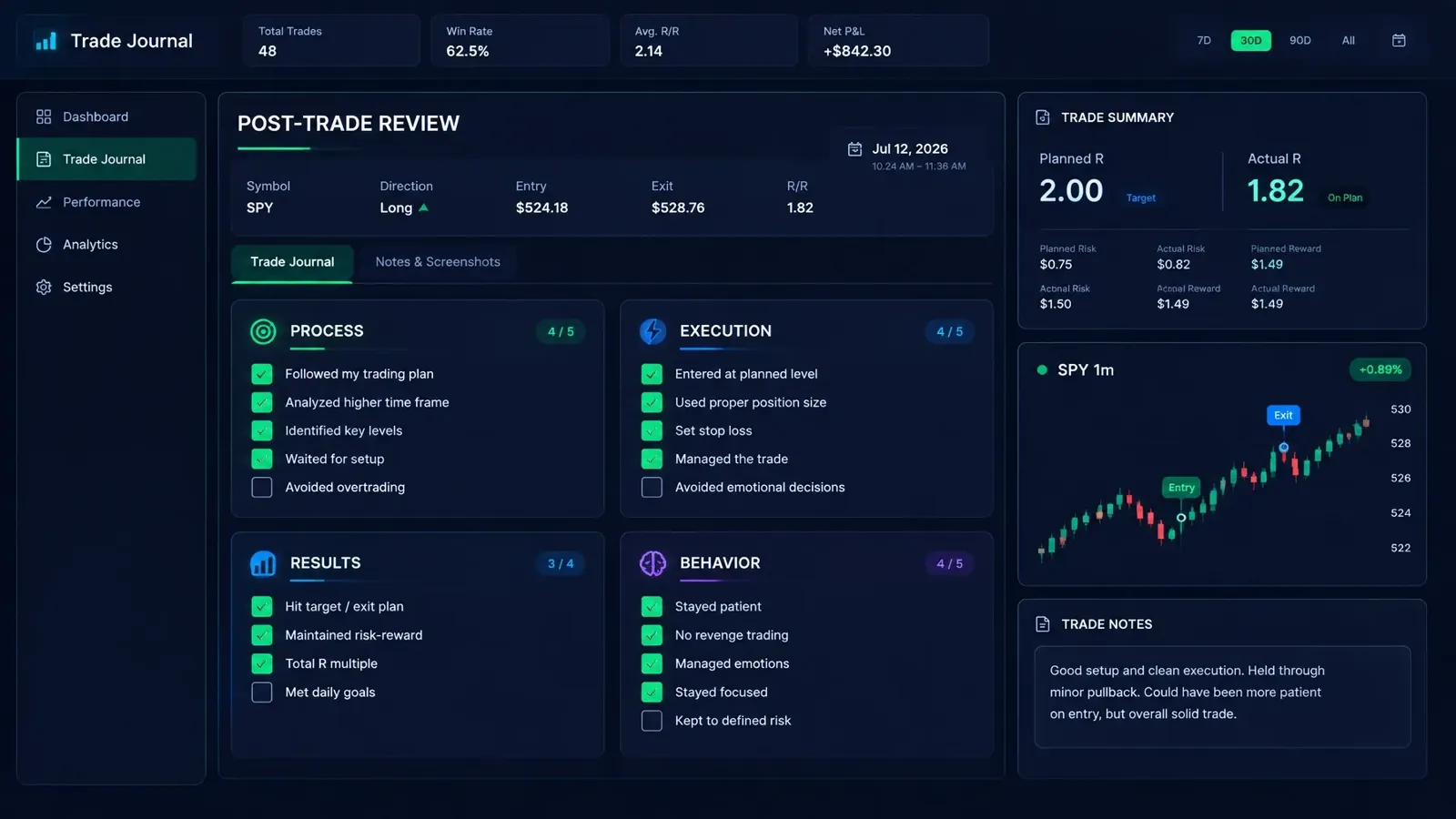
Closing a trade and moving on can leave useful information behind. You may remember whether it won or lost, but forget whether the setup met your rules, whether you followed your exit plan, or what changed during the trade.
A short review helps you separate process from outcome. A trade can lose while following your plan, or make money despite a rule break. Those are different records, and they call for different follow-up.
Use this copy-ready trade review checklist after each closed trade. Answer briefly and honestly. “No” is useful when it identifies something specific to review.
Process: Check the plan you started with
1. Did I follow my plan from entry through exit? This checks whether you made decisions within the rules you had before entering. A “no” means you changed the plan, skipped a step, or took an action you had not defined.
2. Did the setup match my saved criteria? Compare the trade with your written entry criteria and context filters, not with how attractive it looks afterward. A “no” means at least one required condition was missing or you treated a near-match as a valid setup.
3. Did I size the position by rule? Check the share or contract count against your account risk limit and planned stop or defined risk. A “no” means conviction, convenience, or a sizing mistake affected the position size.
Execution: Compare what you did with what you planned
4. Was my entry consistent with the plan? Review whether you entered at the planned level or according to the setup’s defined trigger. A “no” may mean you entered late, chased price, or acted before the entry condition was met.
5. Did I honor my stop or invalidation rule? Check whether you followed the planned exit if the trade moved against you. A “no” includes moving a stop farther away, removing it, or holding after the setup was invalidated.
6. Did I follow my exit discipline? Compare your actual exit with your planned target, trailing rule, or other exit condition. A “no” means you changed the exit without a rule-based reason, or delayed closing after your condition was met.
Results: Record what the trade contributed
7. What R-multiple did I realize compared with the plan? R represents the initial amount you planned to risk; realized R lets you compare outcomes across different position sizes. Record the actual result beside the planned reward or risk: an unexplained gap is a prompt to review your management, not proof that the strategy is broken.
8. Did actual risk stay close to planned risk? Compare the risk you intended to take with the risk you actually carried, including any changes in size or stop. A “no” points to a difference worth identifying before you assess the trade’s result.
9. How does this trade affect my expectancy record? Log the result consistently in the same units you use for your other trades. One trade cannot establish expectancy; a missing or inconsistently recorded result, however, makes the larger calculation less useful.
10. Was the result from a rule-following trade or a rule break? Tag whether you followed your process, then keep that tag with the outcome. A “no” to clear classification, or a habit of judging trades only by profit or loss, makes it harder to tell strategy performance from execution problems.
Behavior: Look for decisions that can repeat
11. Did I take this trade to recover a previous loss? Check whether the trade met your criteria on its own, rather than serving as a reaction to an earlier outcome. A “yes” suggests revenge trading may have influenced the decision.
12. Did I take an oversized position? Compare actual size with the amount your rules allowed. A “yes” means you carried more exposure than planned, even if the trade worked out.
13. Did I exit early because I felt uncomfortable? Check whether fear, impatience, or a desire to protect an open gain replaced your exit rule. A “yes” identifies an early exit to review; it doesn’t automatically mean holding longer would have been the right choice.
14. Did I skip my trading rules checklist before entering? Confirm that you checked the setup, context, risk, and other required conditions before committing. A “yes” means the trade bypassed a control designed to catch missing information.
15. Did emotion change a decision during the trade? Note whether frustration, fear, excitement, or overconfidence affected your entry, size, stop, or exit. A “yes” is a useful tag to compare with other trades, not a reason to judge yourself.
Run the review in under five minutes
Keep the post-trade review short enough to repeat. Record the result and answer each question with yes, no, or not applicable, adding a brief note only when a “no” needs context.
- Capture the facts: Record the instrument, entry, exit, size, and result.
- Check the plan: Compare the setup, risk, and management with your written rules.
- Tag deviations: Name the specific issue, such as late entry, oversized position, or early exit.
- Choose one follow-up: Note one decision to repeat or review in the next session.
Avoid writing a long explanation for every trade. The goal is a consistent record you can compare, not a detailed story written from memory.
Review the answers together each week
One trade gives you a record, not a reliable pattern. At the end of the week, group your reviews by strategy, setup, market context, and behavior tags. Then look for repeated answers.
- Count rule breaks: Check whether the same “no” appears across multiple trades.
- Compare execution and results: Review outcomes for trades that followed the plan separately from those that did not.
- Look for repeated behavior: Check for clusters such as revenge entries, early exits, or oversizing.
- Select one process adjustment: Choose a clear behavior to monitor in the next week.
If you change a strategy rule, distinguish that change from an execution correction. A recurring rule break may call for a tighter checklist or more deliberate review; it does not automatically mean the strategy itself needs a new entry condition.
Keep the plan and review connected
A trade journal is more useful when it preserves the rules and plan behind the trade. The Traders Tool Chest Journal connects each trade back to the strategy rules it came from. The Strategy builder saves your entry criteria, context filters, risk parameters, and exit conditions. Trade Wizard pushes structured trade-ready plans into the Journal, so you can compare plan versus actual in one place. Journal features are included with Pro at $60/month and Premium at $120/month (Premium includes everything).
After a trade closes, Trade Replay lets you step through historical candles and revisit the trade’s price action. AI Insights can surface habits such as oversizing or discipline drift for you to check against your journal. Trade Replay and AI Insights are available with Pro at $60/month and Premium at $120/month.
If you want the journal to fill itself, the Journal supports automated broker syncing via SnapTrade. Synced trades carry the same plan-versus-actual fields into your review.
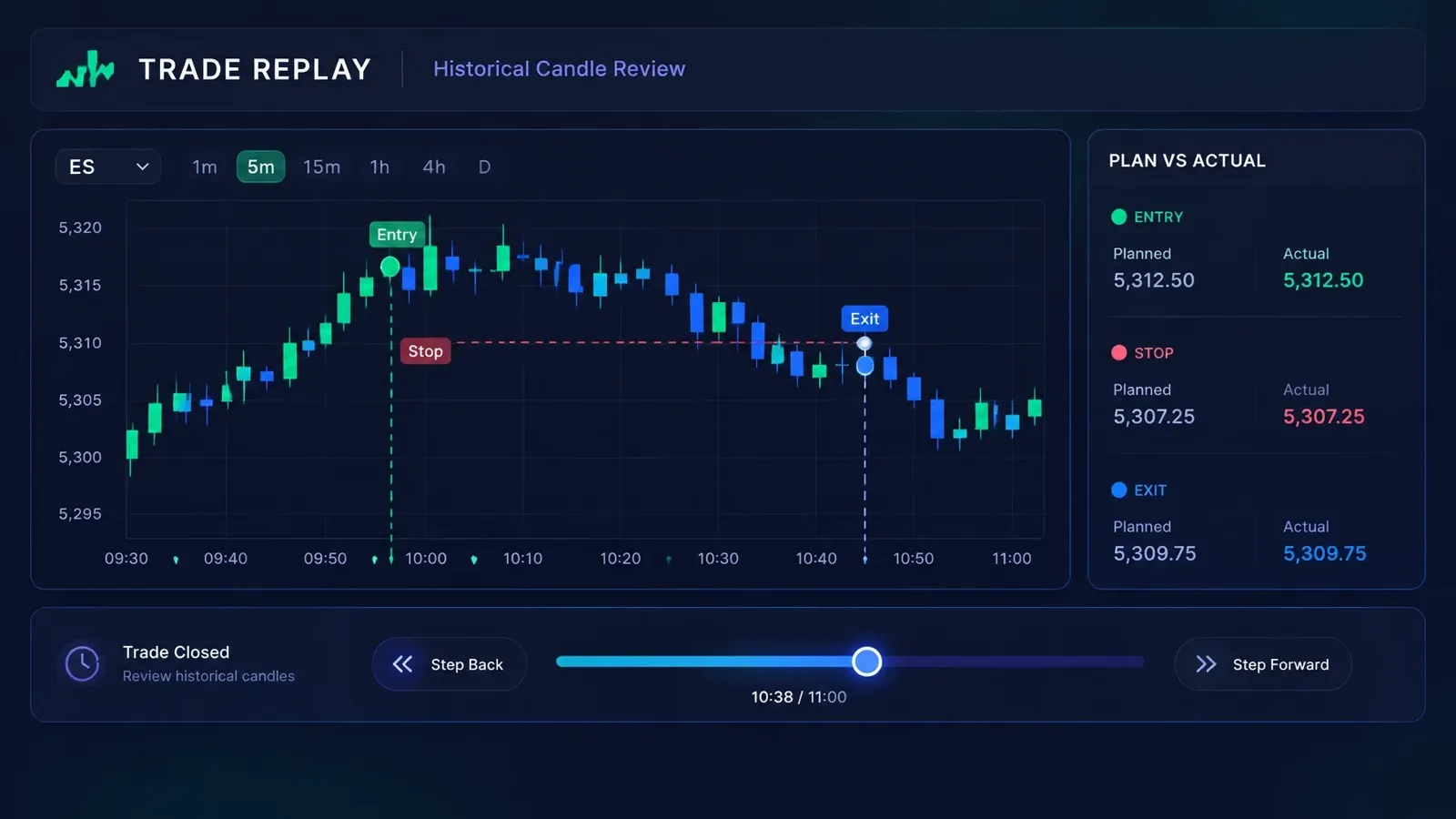
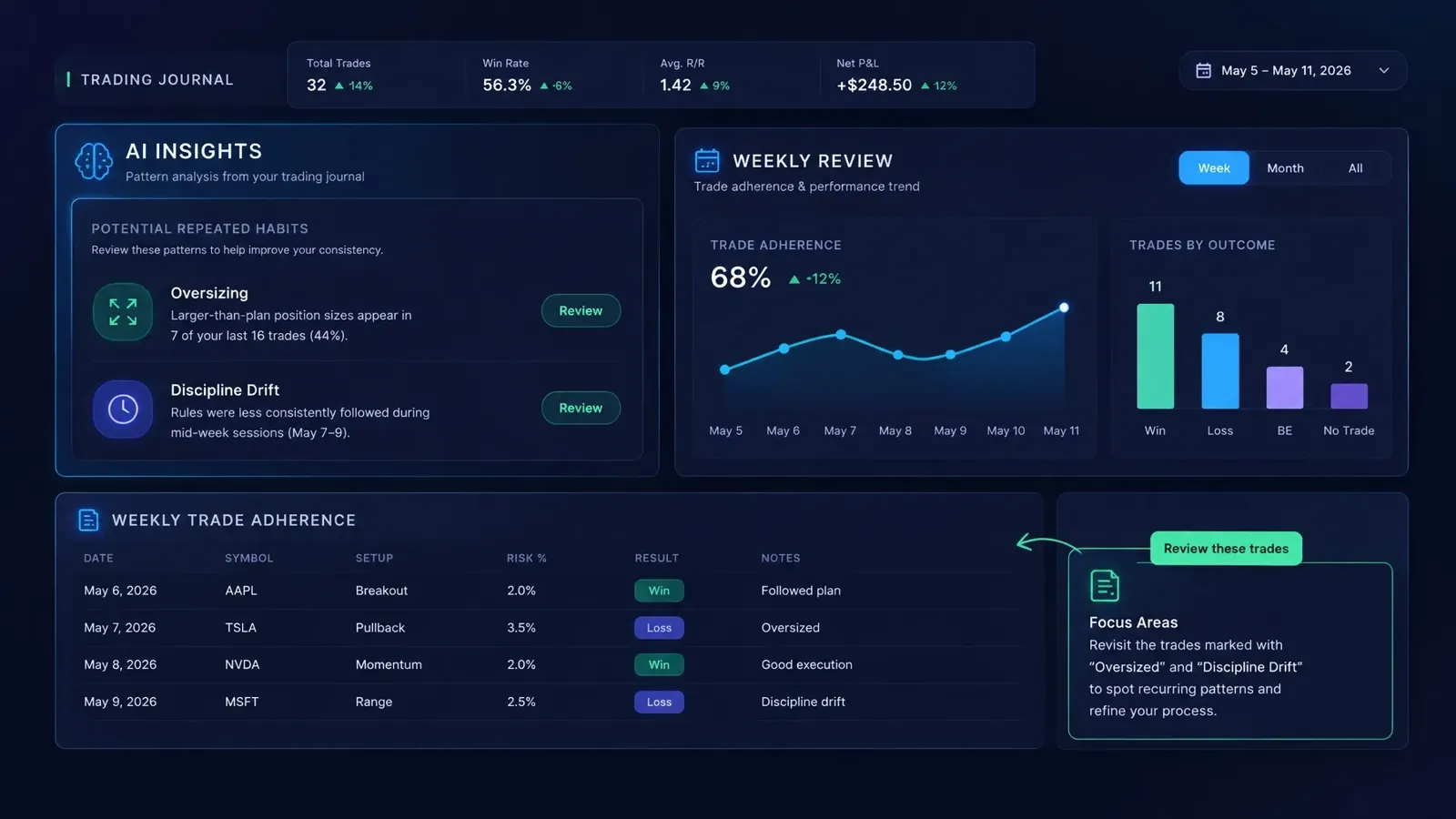
These tools can help keep your review connected to your process. They do not replace your judgment. Orders are placed with your broker.
For current plan details, visit the Traders Tool Chest pricing page. You can also read our guides to options trading journals and position sizing rules.
Frequently asked questions
Should I review every trade, including a loss?
Yes. A brief review helps you distinguish a planned loss from a trade that departed from your rules. The result alone doesn’t tell you whether the process was sound.
What should I record in an options trading journal?
Record the strategy, entry and exit, position size, planned risk, realized result, and whether you followed your rules. Use consistent fields so you can compare trades over time.
Can Traders Tool Chest place trades for me?
No. You place orders with your broker. Traders Tool Chest helps you plan and review trades.
Does a trade review checklist guarantee better results?
No. A checklist organizes your review; it cannot guarantee profit or remove market risk. Every decision remains yours.
A repeatable trade review checklist gives you a clear way to examine process, execution, results, and behavior after each close. Record the answers, look for patterns in your weekly review, and choose a practical next step. No tool guarantees profit, and every trading decision remains yours.